
The yearly check that keeps small problems small
Diabetes quietly changes circulation, sensation and healing in your feet. A comprehensive annual assessment catches those changes early, long before they become ulcers, infections, or worse.
- Comprehensive six-part assessment
- Zebris pressure mapping included
- Prevention-first, education always
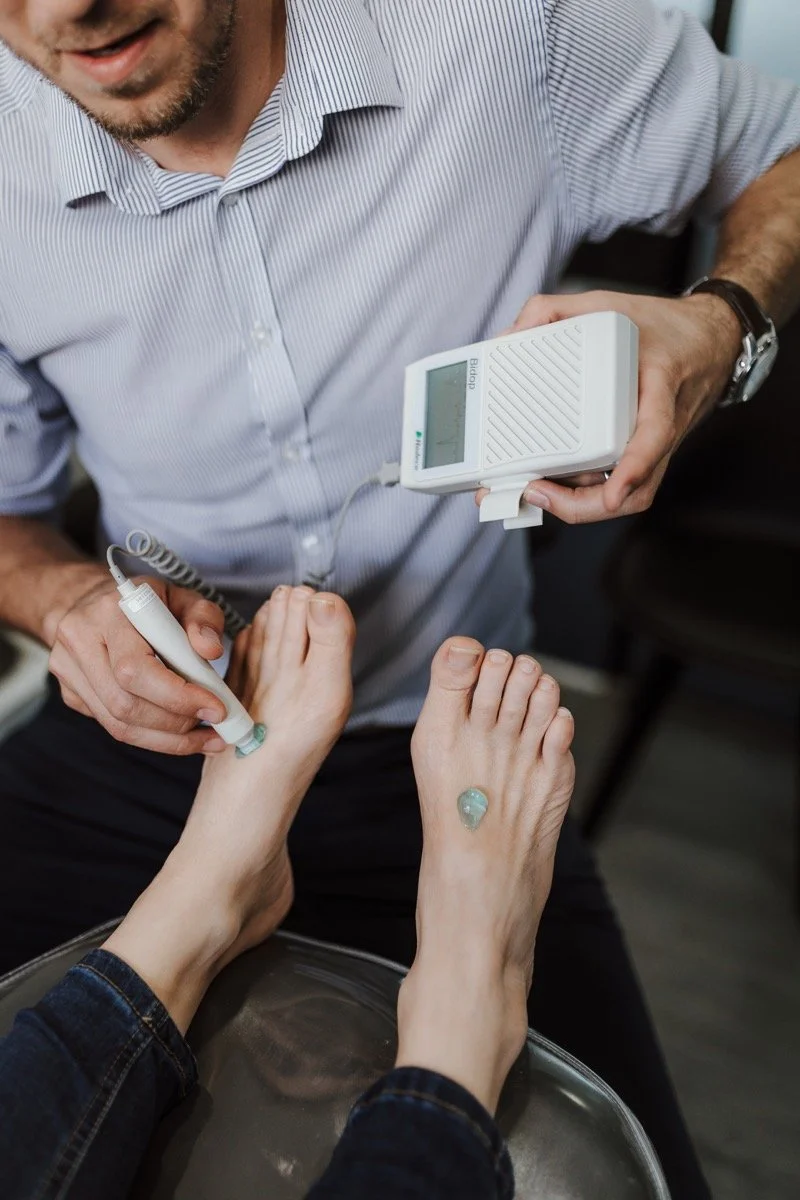
Six checks, one thorough assessment
-
Circulation check
Blood flow to your feet, checked for early signs of peripheral arterial disease.
-
Neuropathy testing
Specialised tools test for nerve damage or loss of sensation before you'd notice it yourself.
-
Skin & nail evaluation
Dryness, cracks, wounds, fungal infection and ingrown nails, caught while they're small.
-
Footwear assessment
Your shoes, checked for the pressure points and friction that become ulcers.
-
Pressure & gait analysis
The Zebris 3D system maps high-pressure zones under your feet, the exact spots to protect.
-
Education & prevention
Personalised guidance on care, hygiene and footwear, so protection continues at home.
Four signs it's time for a check
- You have diabetes and haven't had a foot check in the past year
- Tingling, numbness or other changes in sensation
- Wounds or ulcers that are slow to heal
- Foot shape changes making footwear uncomfortable
We address the full range of diabetic foot issues: reduced circulation, neuropathy, ulcers and wounds, corns and calluses, fungal nails, ingrown toenails and Charcot foot.
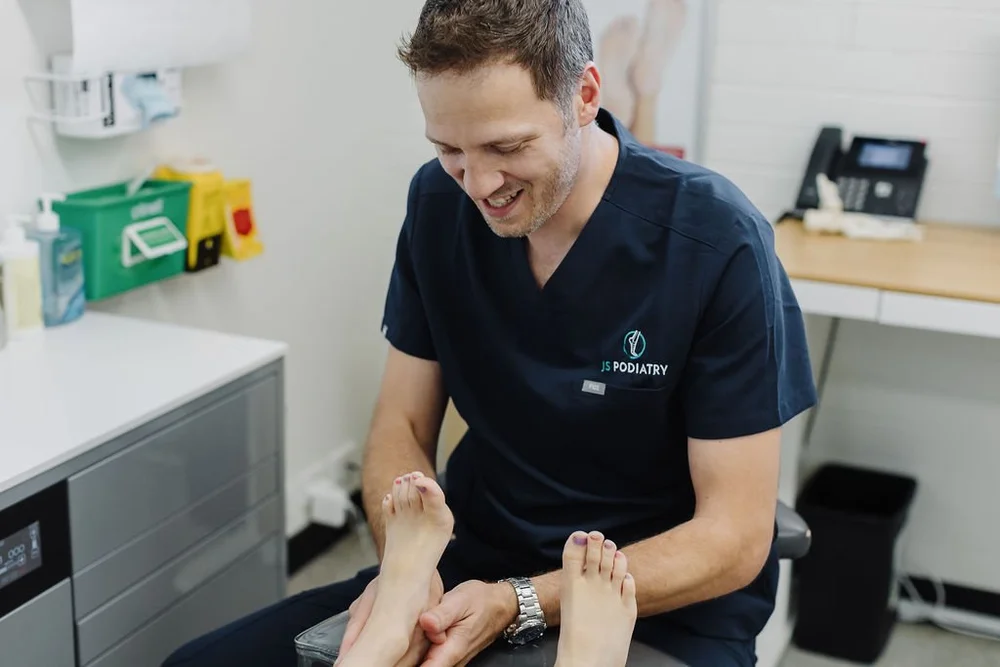
Been told to get your feet checked and kept putting it off?
Almost everyone does. A foot check is undramatic: someone looks, tests the feeling and the circulation, and tells you where things stand. Knowing is easier to live with than wondering. Tell us a bit and one of our podiatrists will come back to you about what is worth doing and when.
Thanks, that is with us
Your reference is . One of our podiatrists will read what you have written and get back to you the way you asked, usually the same day during clinic hours (Mon to Fri 7:30 am to 6:00 pm, Sat 8:00 am to 12:00 pm).
Demonstration build: this was formatted for the clinic but not delivered anywhere yet.
- Extensive experience in diabetic foot health
- Zebris 3D gait analysis for precise pressure mapping
- Prevention, education and early intervention first
- East Perth clinic, easy access, easy parking
“With diabetes, the difference between a callus and an ulcer is often just time. Regular assessment buys that time back.”
, Johan Steenkamp, Owner, JS Podiatry