Regenerative injections for pain that won't quit
Prolotherapy stimulates your body's own repair process to strengthen damaged ligaments and tendons, a non-surgical answer for chronic injuries that other treatments haven't fixed.
- Non-surgical, minimal downtime
- Strengthens tissue rather than masking pain
- Improvement usually within 1 to 3 treatments
Why prolotherapy instead of a cortisone shot?
Steroid injection
Addresses the inflammation only. Weakens ligaments and tendons over time, and delays bone healing, relief now, at a structural cost.
Prolotherapy
Strengthens soft tissue and assists repair. The treated area becomes stronger and more stable, which is why it's considered regenerative medicine.
Four steps from chronic to stable
- 01
Assess
History and careful palpation around the injury map exactly where the weakened tissue is, and where the injections should go.
- 02
Inject
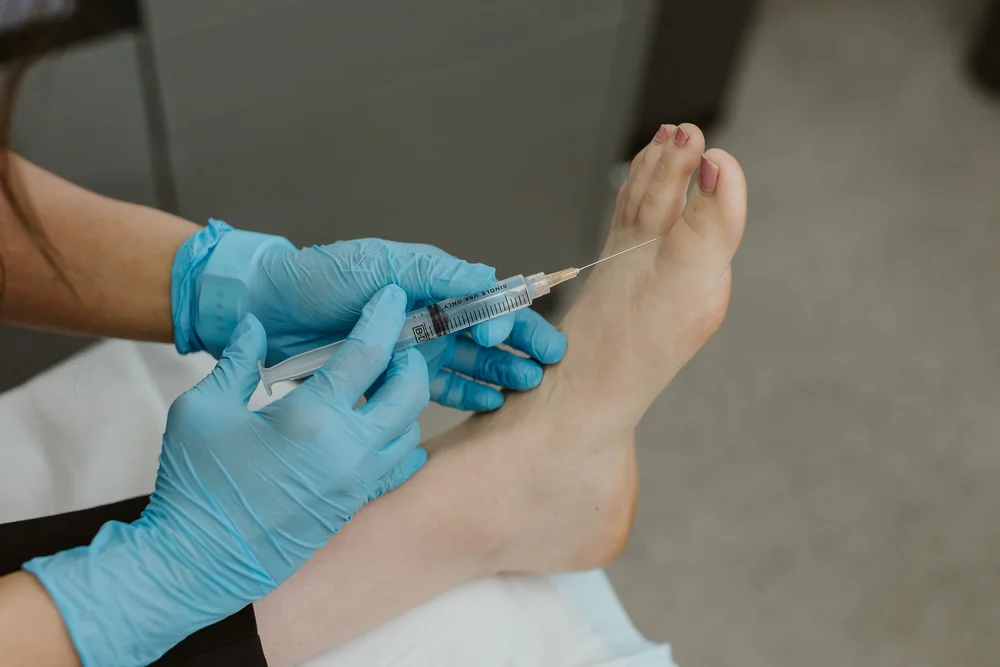
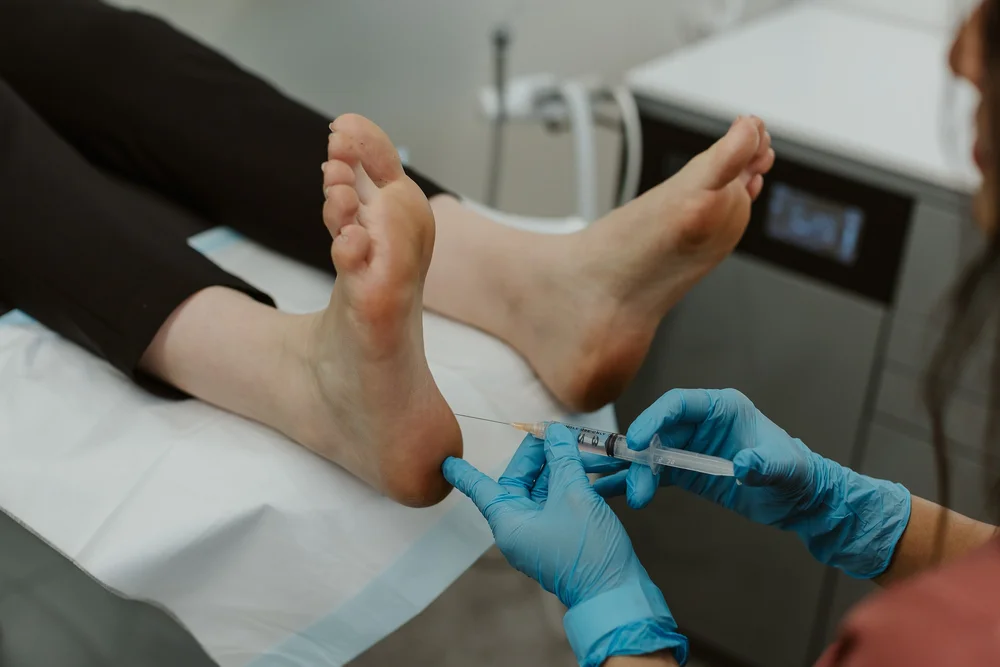
A dextrose and local-anaesthetic solution: the anaesthetic relieves pain immediately, the glucose triggers your body's own repair response.
- 03
Strengthen
Usually four appointments, two weeks apart. Improvement typically shows within one to three treatments as tissue rebuilds.
- 04
Maintain
For some conditions, like midfoot arthritis, maintenance sessions every three to six months keep the gains.
Made for ligaments that gave up early
Prolotherapy earns its place against:
- Plantar fasciitis
- Achilles tendinopathy
- Chronic ankle sprains
- Ligament laxity & joint instability
- Overuse injuries
After each session: expect dull soreness for a day or three, skip strenuous exercise for two days, keep gentle movement up, and hold off the anti-inflammatories and ice, which work against the healing the injection just started.
Been round the houses with this one?
Prolotherapy usually comes up after the usual things have been worked through, which means most people arrive at it worn down by the whole business. Whether it suits a particular problem is a clinical call rather than a menu choice. Tell us where you are up to and a podiatrist will read it properly.
Thanks, that is with us
Your reference is . One of our podiatrists will read what you have written and get back to you the way you asked, usually the same day during clinic hours (Mon to Fri 7:30 am to 6:00 pm, Sat 8:00 am to 12:00 pm).
Demonstration build: this was formatted for the clinic but not delivered anywhere yet.
- Podiatrists experienced across prolotherapy conditions
- Combined with shockwave, orthotics and rehab where it helps
- Every plan tailored to your goals
- East Perth clinic, no referral needed
“Steroids quiet the pain; prolotherapy rebuilds the tissue. For chronic instability, that difference is everything.”
, Johan Steenkamp, Owner, JS Podiatry